
Items of Interest
- Economic Overview
- Tariff War Update
- The Big Beautiful Bill
- Israel / Iran / United States Conflict
- India / Pakistan Conflict
- The Fed’s Path / Who Will Be the Next Fed Chair?
- Immigration Policy Shifts
- The Markets Going Forward
Market Overview
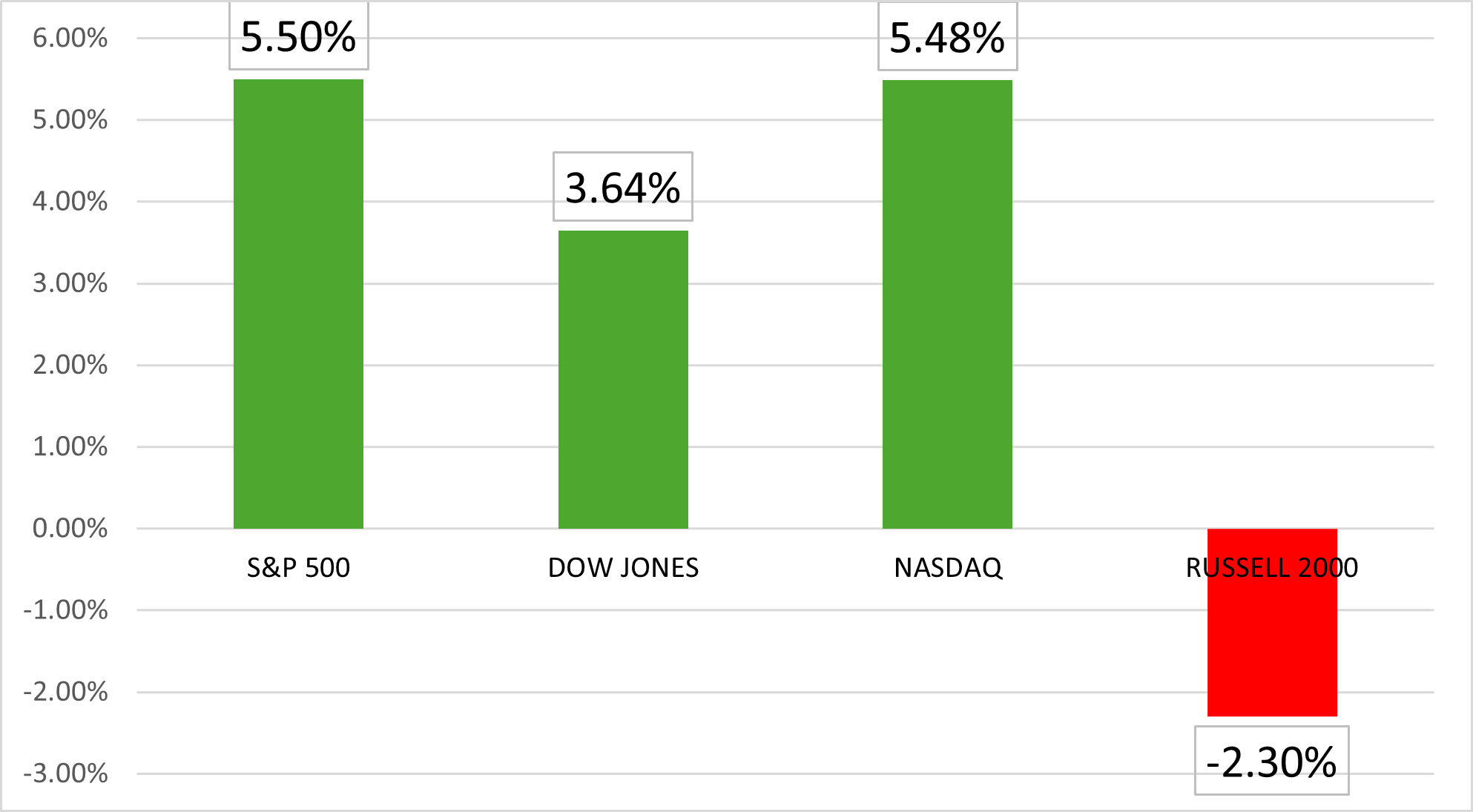
The second quarter of 2025 ended up, with all four market indices increasing. The S&P 500 ended up 5.50%. Out of the twelve market sectors, nine ended up. Technology was up the most (23.54%) in a reverse of Q1. Energy was the worst performing sector (-8.40%).1 The market indexes (Dow Jones, S&P 500, NASDAQ, & Russell 2000) ended as follows:2
Economic Overview
The economy in the second quarter of 2025 appears to have been pretty stable. This is especially surprising since the entire quarter was wracked with tariff costs fears, consumer spending uncertainty, and wars. Inflation lowered to the mid 2% range, global tensions rose to the boiling point, and political issues continued to dominate the news once again.
Q1’s market decline became a thing of the past, with all of the March and April losses in the S&P 500 being made up for by the middle of May, and the S&P hit an all-time high by the end of June. This is impressive, since Q2 was one of the most unstable geopolitical and economic quarters since Covid, all things considered.
The economy was fairly stable, with stable projected growth and a fairly flat job market. And even though the new administration brought an unprecedented wave of uncertainty and volatility, it didn’t seem to really affect the economy in the short term. The Federal Reserve still remains ambiguous, with a wait and see attitude.
Oil prices rose sharply at the onset of the Israel Iran War but fell by the end of June. Positive forces in the economy still prevailed with the gradual decline from Q4 and Q1 2024 subtly continuing. Consumer spending and confidence rose slightly but are still much lower than they were in January. Overall, the US economy and markets were, once again, all right.
I will delve into the details in a moment, but let’s look at the Q2 2025 economic synopsis:
- GDP for Q1 came in at -0.2% and Q2 is forecasted to be approximately 2% growth.3 These numbers are annualized of course.
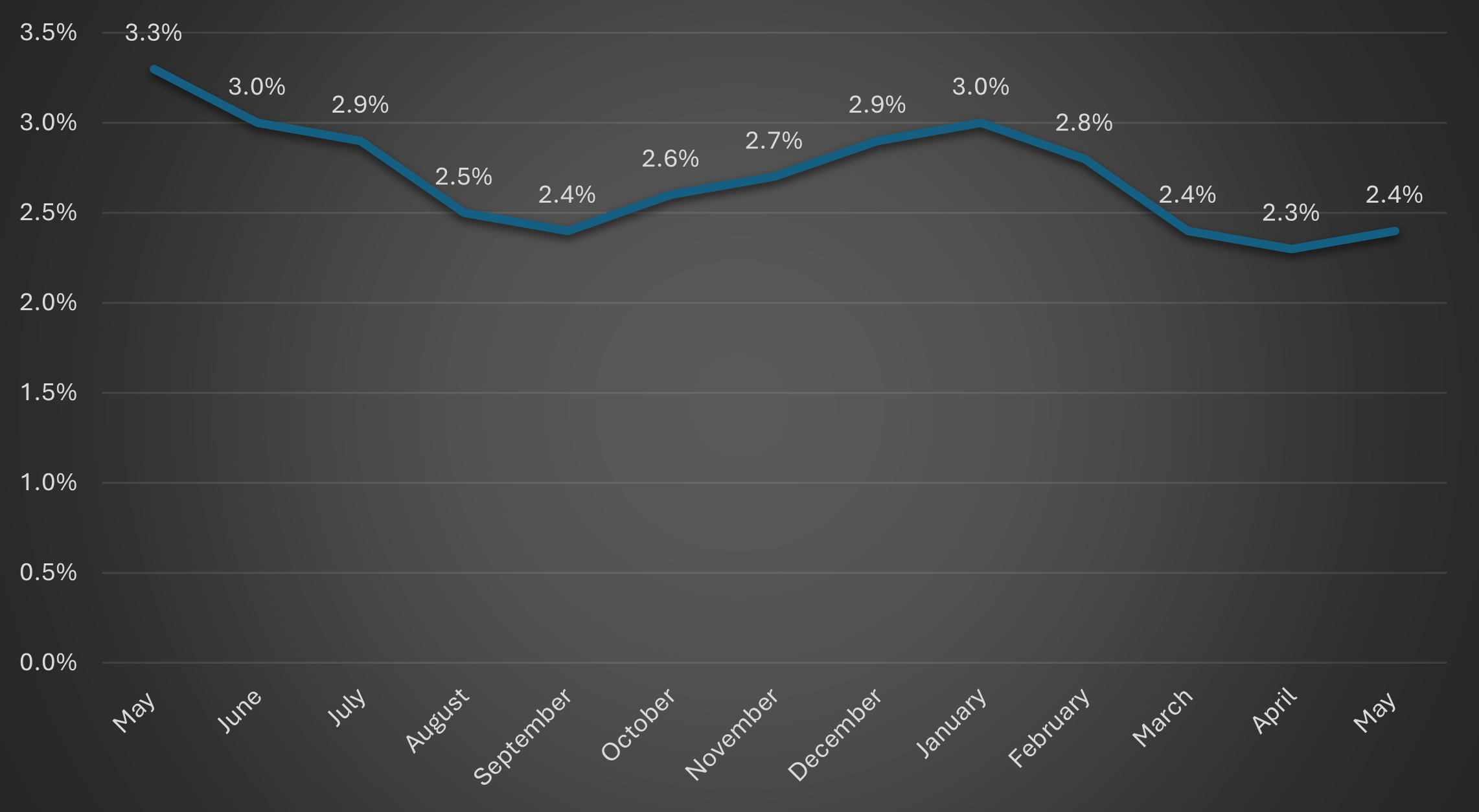
- Inflation, as of May 31st, stood at 2.4% year over year.4
- The Industrial Production Index decreased slightly from 103.75 in March to 103.59 in February 2025.5
- The Unemployment Rate has remained flat at 4.2% since November 2024.6
- 619,000 full time equivalent jobs were created from January – May according to projections. This is a large decrease from the same time frame in 2024, which produced 898,000 jobs.7
Tariff Trade Update
While the April 2nd tariffs took up much of the news and political oxygen in Q2, their effects ended up being tepid. There was wild gyration from 10% tariffs to all the way up to 145% and back down again, but overall, the administration’s bark was worse than its bite, in that, the tariffs really were for negotiations, not revenue raising. Now, tariff impacts on supply and inflation are taking time to work their way through. So, we may see a slight pickup in inflation over the next quarter, but the chances of this are far less than was originally thought. Overall, the President has been much less aggressive than he projected, and that has led to a much better economic condition than expected.
The biggest risk in the tariff arena at the moment is with China. An agreement appears to be in the works, but this could suddenly and violently reverse. This is a wait and see scenario. But overall, the tariff situation is being handled in a manner that is a net positive, so far.
The Big Beautiful Bill
With the passage of the One Big Beautiful Bill Act (OBBBA), it has caused all sorts of economic and partisan debate. Will it raise the deficit? Were those risks worth stopping a large tax increase, especially on business owners? Why didn’t the Republicans actually cut spending? All of these are valid questions. However, we must remember that most of the bill simply extends (makes permanent) the Tax Cust and Jobs Act of 2017. So, most of the substance of the bill is simply changing expiration dates. The passage of the OBBBA won’t change much since it is maintaining the status quo. Time will tell if the bill was the right decision. But I thought it was worth bringing some clarity to the situation. The bill simply doesn’t contain a lot of new features. Even the decrease in taxes on tips and overtime are capped at $25,000 and $12,500 respectively. If I had to pick the biggest winners of the OBBBA, it is seniors and businesses building facilities in the United States. Like I said, no large changes were made, but even small changes can help. We will have to wait and see its effects over time.
Israel, Iran, and United States Conflict
One of the biggest stories in Q2 was that of the launch of Operation Rising Lion by Israel. On June 13th, Israel struck approximately 100 sites in Iran, crippling the country’s nuclear, air defense, and ballistic missile launching sites. They significantly damaged all three, but they completely obliterated the air defense systems, giving Israel (and later the United States) air superiority over the next 2 weeks. This attack was in response to the failure of US / Iranian talks to make any progress in the curbing of Iran’s nuclear program.
Iran retaliated with hundreds of ballistic missiles and drones targeting Israeli infrastructure and civilian centers, Israeli air defenses downed most incoming threats, but not without some damage and casualties, including at least 28 fatalities on the Israeli side, unfortunately.
The pivotal moment came on June 21–22, when the U.S. joined the conflict with Operation Midnight Hammer, in which several B‑2 bombers delivered bunker‑buster bomb strikes on Iran’s underground nuclear sites. This set back Iran’s nuclear program significantly, but left some infrastructure and enriched uranium in tact. The conflict is now in a ceasefire, and talks with the United States are rumored to be resuming soon.
This story has been covered extensively, but what hasn’t gotten as much coverage is the stock and oil market’s response. The stock market rose and oil prices didn’t rise much over the 12 day period. These responses are highly unusual, especially for a Middle East conflict. Typically, oil spikes dramatically with a conflict like this. This may have been the most surprising anomaly in oil since the crash in 2020. The reason for this appears to be that one of the largest geopolitical risks in the world today is Iran and its proxies getting a nuclear weapon, and after this war, Iran’s capacity to obtain those weapons has been pushed back significantly. So, in a strange way, this war was a reduction of risk, not an increase.
India / Pakistan Conflict
Before the Israel / Iran conflict, the biggest war story in Q2 was the India / Pakistan conflict. In May 2025, after a terrorist attack in Pahalgam on April 22 that killed 26 civilians, India launched an attack on Pakistan, targeting militant camps in Pakistan and Pakistan‑administered Kashmir with missiles and airstrikes. Pakistan retaliated with mortar shelling, missiles, and drone strikes against Indian military bases. The hostilities lasted four days before a U.S.-brokered ceasefire on May 10. Both sides claimed victory. This resulted in Pakistan nominating President Trump for a Nobel Peace Prize.
This conflict may have seemed random to many Americans, but that is because the history between these two nations is not widely known in the west. The India-Pakistan conflict is one of the most enduring and complex geopolitical rivalries in the world, rooted in the partition of British India in 1947. When the subcontinent was divided, two separate nations were created: India (majority Hindu) and Pakistan (majority Muslim). The division sparked mass migrations, violence, and deep animosity that still lingers.
At the heart of the conflict is the disputed region of Kashmir. Both India and Pakistan claim the territory in full but control it in part. This disagreement has led to three major wars in the 1900s as well as numerous skirmishes and militant insurgencies.
The India-Pakistan conflict remains volatile, with nuclear weapons and rising nationalism on both sides making it a flashpoint with global implications. Despite shared cultural and historical ties, peace remains elusive, and tensions continue to flare along the heavily militarized Line of Control. This is why this conflict is of so much importance. Pakistan is one of the only countries in the world with nuclear weapons that does not have a law against launching preemptive strikes. This situation bears watching but has become more stable due to recent negotiations. Oil temporarily rippled during this conflict, but once again, the stable oil market amazingly prevailed.
The Fed’s Path / Who Will be the Next Fed Chair?
The Fed has, once again, taken the path of watch and see, leaving rates the same at 4.25% – 4.5%. The reasons for this are numerous, with tariff impacts still unknown and the labor market remaining extremely strong. The Fed will most likely not change policies unless a change occurs strongly in either a positive or negative direction. This is bringing badly needed stability in these uncertain times for the business community.
Now, there is a more important question arising regarding the Fed. With Fed Chair Powell’s term ending in May of next year, who will President Trump nominate to replace him? So far, the top contenders appear to include Kevin Hassett, current National Economic Council Director and former CEA Chair, Kevin Warsh, ex‑Fed governor with strong Wall Street credentials, Treasury Secretary Scott Bessent, and Fed Governor Christopher Waller, a dovish insider seeking rate cuts. No one candidate is likely to prevail, but at this moment, I would have to give a slight edge to Bessent. Trump is expected to announce his pick this summer, potentially signaling a shift toward more aggressive rate cuts and a “shadow-chair” strategy to pressure Powell. This, while it may bring cuts about too soon, will bring even more clarity to the stock market, which will most likely be a positive force.
For a clearer picture of the current stickiness of inflation, see this chart of inflation over the last twelve months:
Immigration Policy Shifts
While President Trump’s immigration policy has remained fairly stable over the course of 2025, one thing has changed that will benefit the economy. In response to labor shortages, President Trump signaled a shift in immigration policy in June and July 2025, offering leniency for undocumented farm and hospitality workers if employers vouch for them and the workers depart and legally re‑enter the U.S. He directed ICE to pause raids on farms, hotels, restaurants, and food‑processing plants. Agriculture and hotel leaders welcomed the pivot, warning that deportations threatened food supply and staffing. Despite resistance from hardliners insisting on no amnesty, the administration continues exploring ways to both maintain the current workforce and deport criminals. These developments are a good sign for the economy and inflation but are always subject to change. Another item to keep a watch on.
The Markets Going Forward
So, with all of this news and evolving dynamics mentioned above, let’s ask the question once again: what does it look like for the markets and economy going forward? Out of all the years doing these updates, I must say, the outlook might be the most positive for the economy and markets that I have seen in quite a while. Not necessarily in the short term, but over the next few years. There are still many unresolved issues, but many of them are closer to being solved than breaking down further. The economy is still in ok shape overall, but the future appears bright looking forward.
All these items considered, here are the factors to watch for in 2025:
- Continued Trade War
- Continued War in Ukraine
- Us / Iran Nuclear Talks
- Inflation Higher Than Expected
- The Potential Nomination of a New Fed Chair
- Continued Tensions Between China and the United States
- AI’s Place in the Modern Workforce
All these factors still paint a picture of both issues and opportunities. Once again, no one knows what the future holds, but I will say that the scales appear tipped toward the opportunity side. However, the theme for 2025 still remains caution. Discipline, caution, and sticking to core investing principles is still the best strategy. We will see what is in store for the rest of 2025. Whatever happens, I guarantee it will be interesting.
2 https://www.marketwatch.com/market-data
4 https://data.bls.gov/pdq/SurveyOutputServlet
5 https://fred.stlouisfed.org/
6 https://fred.stlouisfed.org/
7 https://data.bls.gov/timeseries/CES0000000001&output_view=net_1mth
Article written by Jonathan Chamberlain of Chamberlain Financial Services an Investment Advisor Representative, holding a Series 7 and Series 66 securities license.
Securities and advisory services offered through Sunbelt Securities, Inc. Member FINRA/SIPC. CPA and related accounting services offered through Chamberlain Financial Services are not associated with the services of Sunbelt Securities, Chamberlain Financial Services and Sunbelt Securities, Inc. are unaffiliated companies. Sunbelt Securities, Inc. does not provide tax or legal advice. Tax advice and preparation services are strictly offered by Neil Chamberlain, CPA.